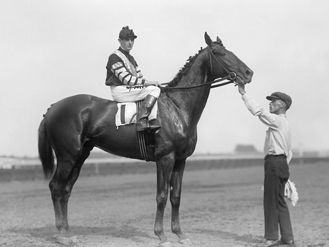
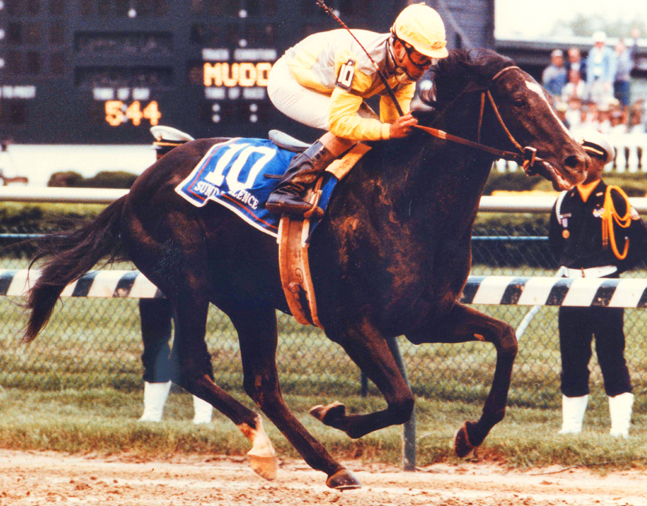
Sunday Silence (KY)
Horse of the Year and Champion 3-Year-Old Male in 1989 when he won the Kentucky Derby, Preakness Stakes, and Breeders’ Cup Classic — defeating champion Easy Goer each time — Sunday Silence finished first or second in all of his 14 races and retired with earnings of more than $4.9 million, which at the time made him the third-leading earner in history behind only Alysheba and John Henry.
1996
1986
Halo
Wishing Well
Understanding

Oak Cliff Thoroughbreds, Ltd.
H-G-W Partners
Charles E. Whittingham
1988-1990
$4,968,554
Racing Record
14
Starts
| 1988 | 3 | 1 | 2 | 0 | $21700 $21,700 |
| 1989 | 9 | 7 | 2 | 0 | $4578454 $4,578,454 |
| 1990 | 2 | 1 | 1 | 0 | $368400 $368,400 |
Biography
Horse of the Year and Champion 3-Year-Old Male in 1989 when he won the Kentucky Derby, Preakness Stakes, and Breeders’ Cup Classic — defeating champion Easy Goer each time — Sunday Silence finished first or second in all of his 14 races and retired with earnings of more than $4.9 million, which at the time made him the third-leading earner in history behind only Alysheba and John Henry.
Bred in Kentucky by Tom Tatham’s Oak Cliff Thoroughbreds, Sunday Silence didn’t necessarily seem destined for greatness. He was a son of 1983 leading sire Halo, who was standing at Arthur B. Hancock III’s Stone Farm, but he was gangly and from a modest female family. Hancock, who had raised the colt for Oak Cliff, consigned the horse to the Keeneland July yearling sale. Hancock was not pleased with the bidding and bought the colt back for Oak Cliff from the consignment for $17,000. Oak Cliff didn’t want the colt, so Hancock owned him. The following year, Sunday Silence was consigned to a 2-year-old sale in California, and again, he did not meet his reserve. Hancock arranged for the colt to go to Charlie Whittingham’s barn, and the Hall of Fame trainer liked what saw enough that he agreed to partner with Hancock on the horse and also brought in partner Dr. Ernest Galliard.
Sunday Silence only raced three times as a juvenile, winning once and finishing second twice. He was growing into himself and handily won an allowance race in his 3-year-old debut. He then came back with a victory in Grade 2 San Felipe Handicap and followed that with a runaway win in the Grade 1 Santa Anita Derby, which established him as the leading Kentucky Derby candidate on the West Coast.
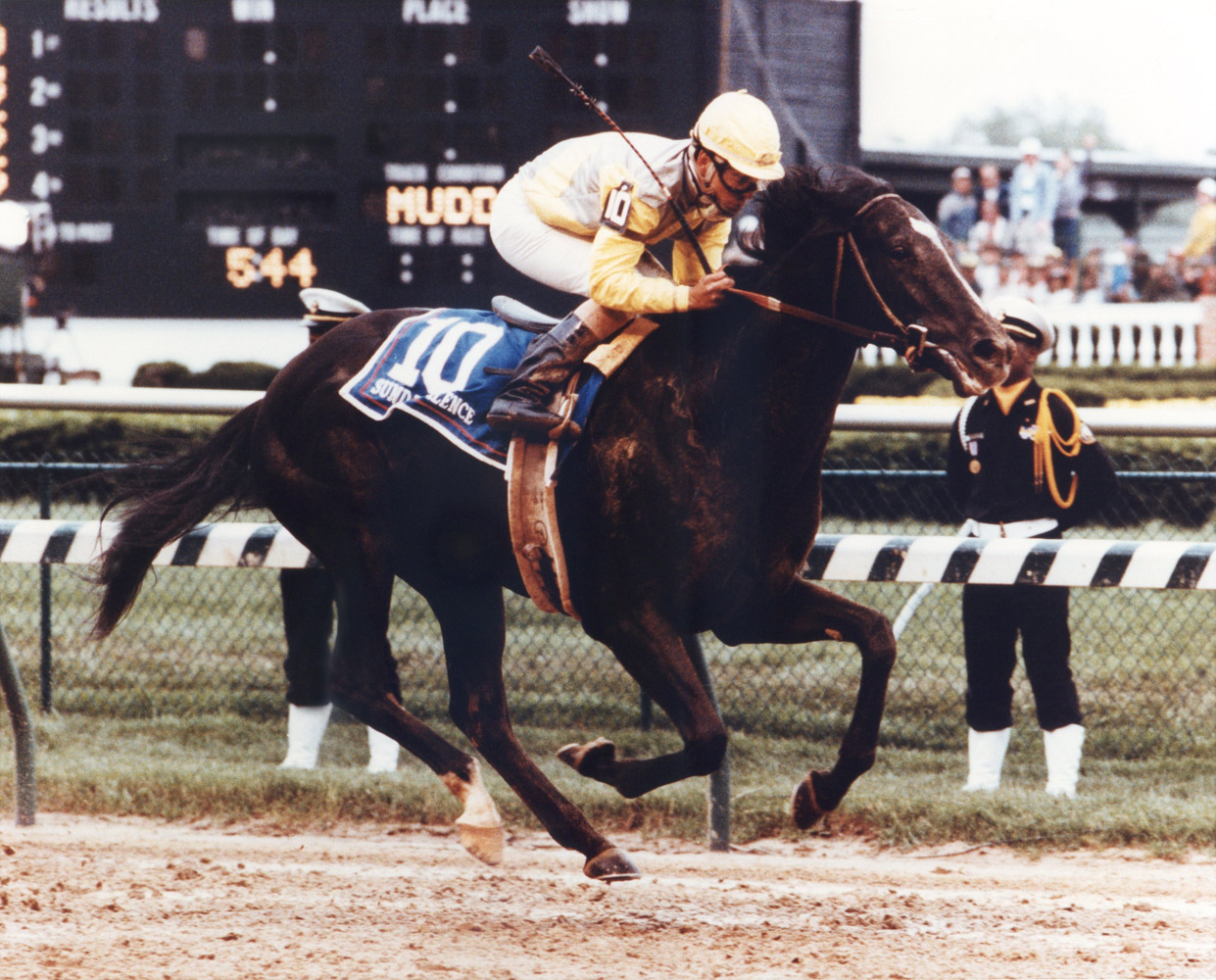
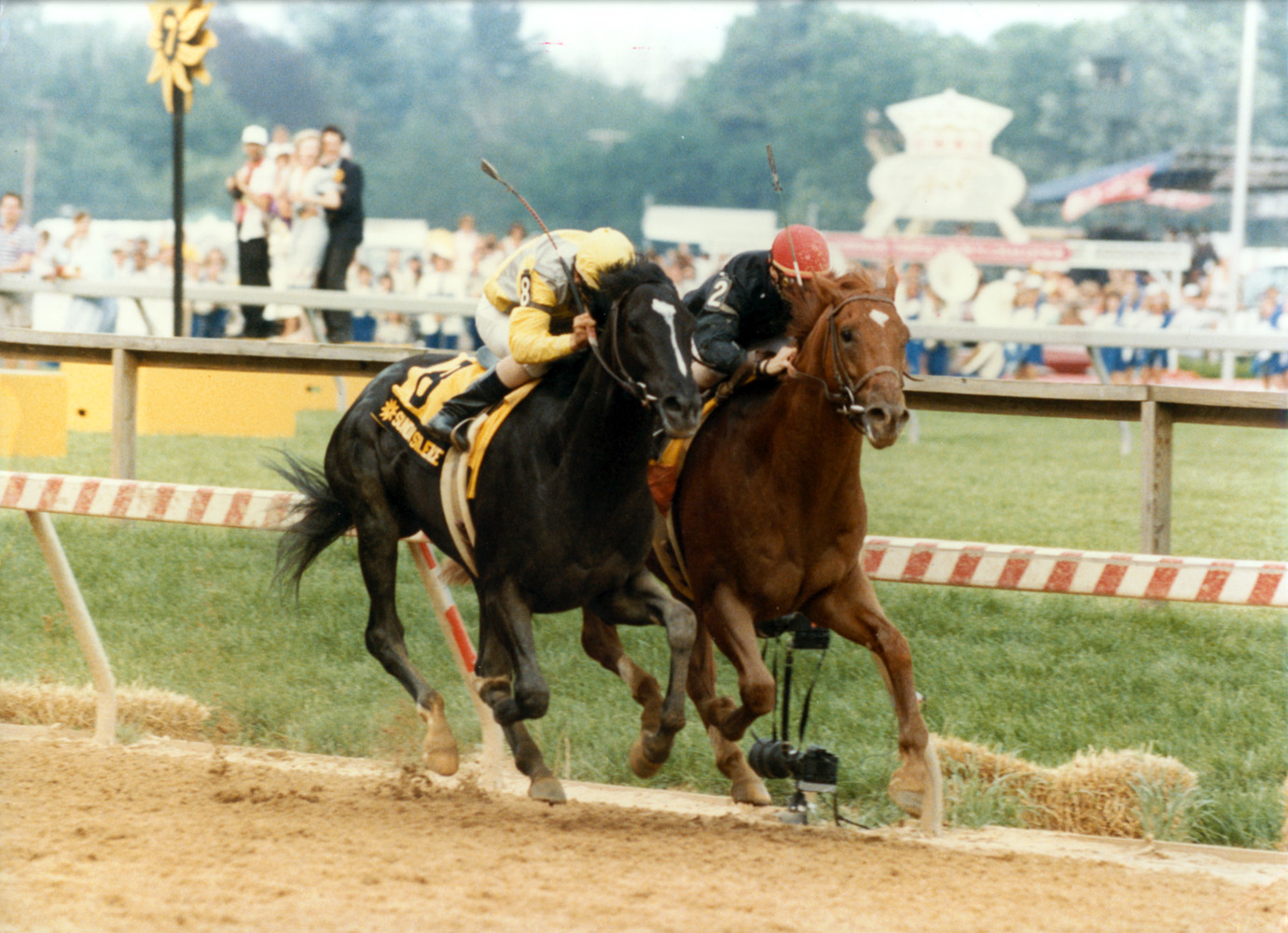
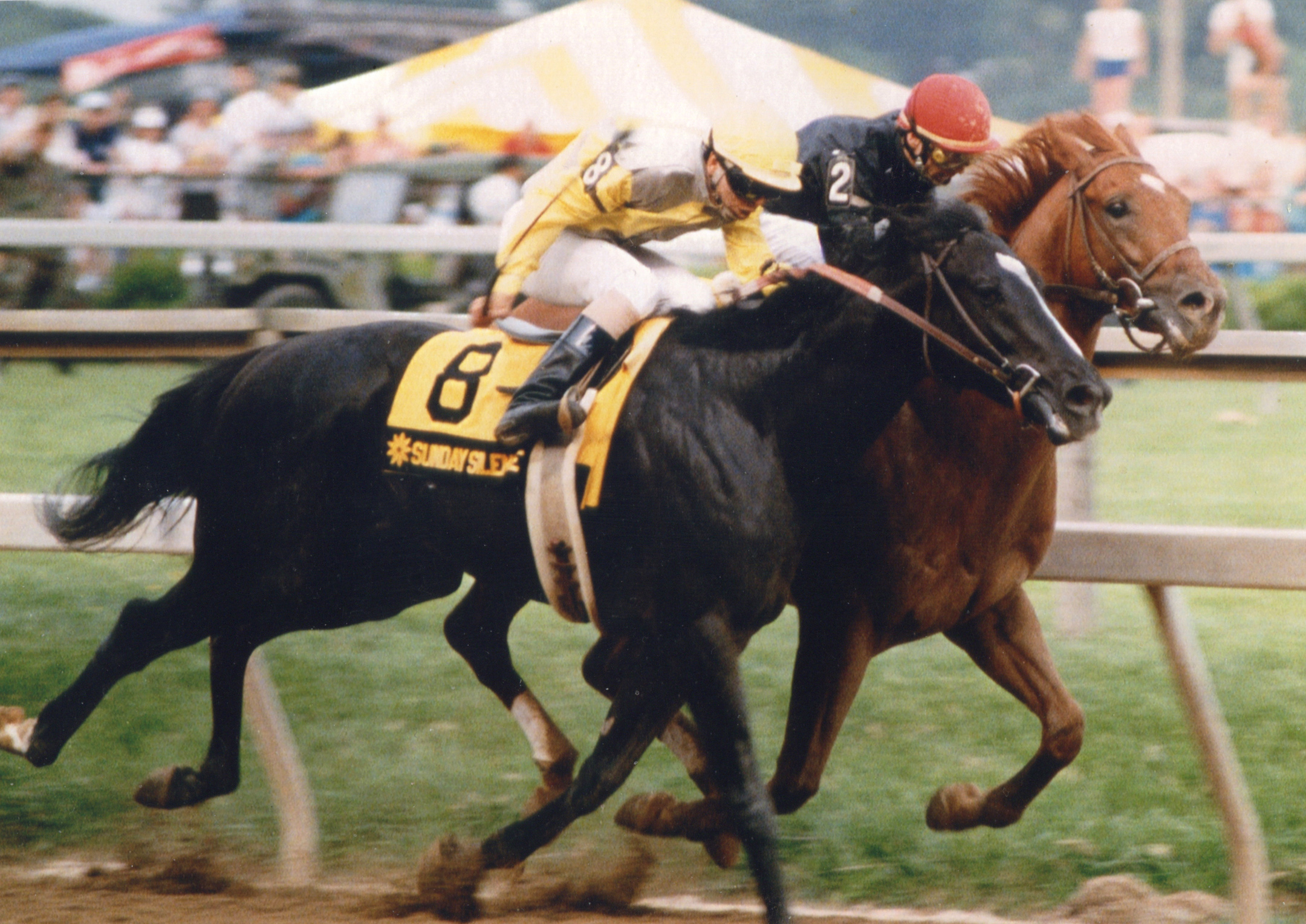
The stage for the Run for the Roses was set. The best colt in the west, Sunday Silence, was to take on the best colt in the east, Easy Goer, the 1988 Eclipse Award winner for Champion 2-Year-Old Male. On an unseasonably cold day in May over a muddy track, Sunday Silence drew clear of his rival in the Kentucky Derby to win by 2¼ lengths at Churchill Downs. Two weeks later, Sunday Silence and Easy Goer were back at it in the Preakness Stakes. In one of the most memorable races of the 20th century, the colts engaged at the top of the stretch and battled all the way to the Pimlico finish line. Neither horse backed down, and at the wire Sunday Silence prevailed by a nose. He was denied the Triple Crown however, with Easy Goer dominating the Belmont Stakes in an eight-length victory.
Back to California, Sunday Silence had a six-week break, then ran second in the Grade 1 Swaps Stakes. He won the Grade 1 Super Derby at Louisiana Downs in his prep for the Breeders’ Cup Classic at Gulfstream, where he was to meet Easy Goer for the fourth and final time. In that race, Sunday Silence moved past his rival on the far turn, then held firm to withstand Easy Goer’s late rush to win the 1¼-mile race by a neck. Sunday Silence was voted the Eclipse Awards for Horse of the Year and Champion 3-Year-Old Male and set a new single-year earnings record of $4,578,454.
Sunday Silence’s 4-year-old season was cut short by injury. He won the Grade 1 Californian Stakes and finished second to subsequent champion Criminal Type in the Grade 1 Hollywood Gold Cup. A leg injury discovered after the latter caused his retirement. He won major races from coast to coast, winning nine times and never finished worse than second. The BloodHorse ranked Sunday Silence No. 31 among the top 100 horses of the 20th century.
A Japanese syndicate, headed by Zenya Yoshida who had acquired a percentage of the horse early in his 4-year-old season, made an offer to purchase Sunday Silence for stud duty at Yoshida’s Shadai Stallion Station in Shiraoi, Hokkaido. There was little interest in Sunday Silence from American breeders, so Hancock accepted the syndicate’s offer.
Sunday Silence became the most influential stallion in Japanese history. He topped the country’s general sire list for the first time in 1995 and did not relinquish the title until 2008, six years after his death in 2002 at the age of 16. Additionally, Sunday Silence was Japan’s leading broodmare sire from 2007 through 2019 and was America’s top broodmare sire in 2016 and 2019. Per statistics compiled by The Jockey Club, Sunday Silence sired 1,089 winners (69.9 percent) and 171 stakes winners (11 percent) from 558 named foals of racing age.
Achievements
Eclipse Award Horse of the Year — 1989
Eclipse Award Champion 3-Year-Old Male — 1989
Triple Crown Highlights
Won the Kentucky Derby — 1989
Won the Preakness Stakes — 1989
Breeders' Cup Highlights
Won the Classic — 1989
Notable
Won the San Felipe Handicap — 1989
Won the Santa Anita Derby — 1989
Won the Super Derby — 1989
Won the Californian Stakes — 1990
Horse Profile for Sunday Silence | Equibase is Your Official Source for Thoroughbred Racing Information
Media